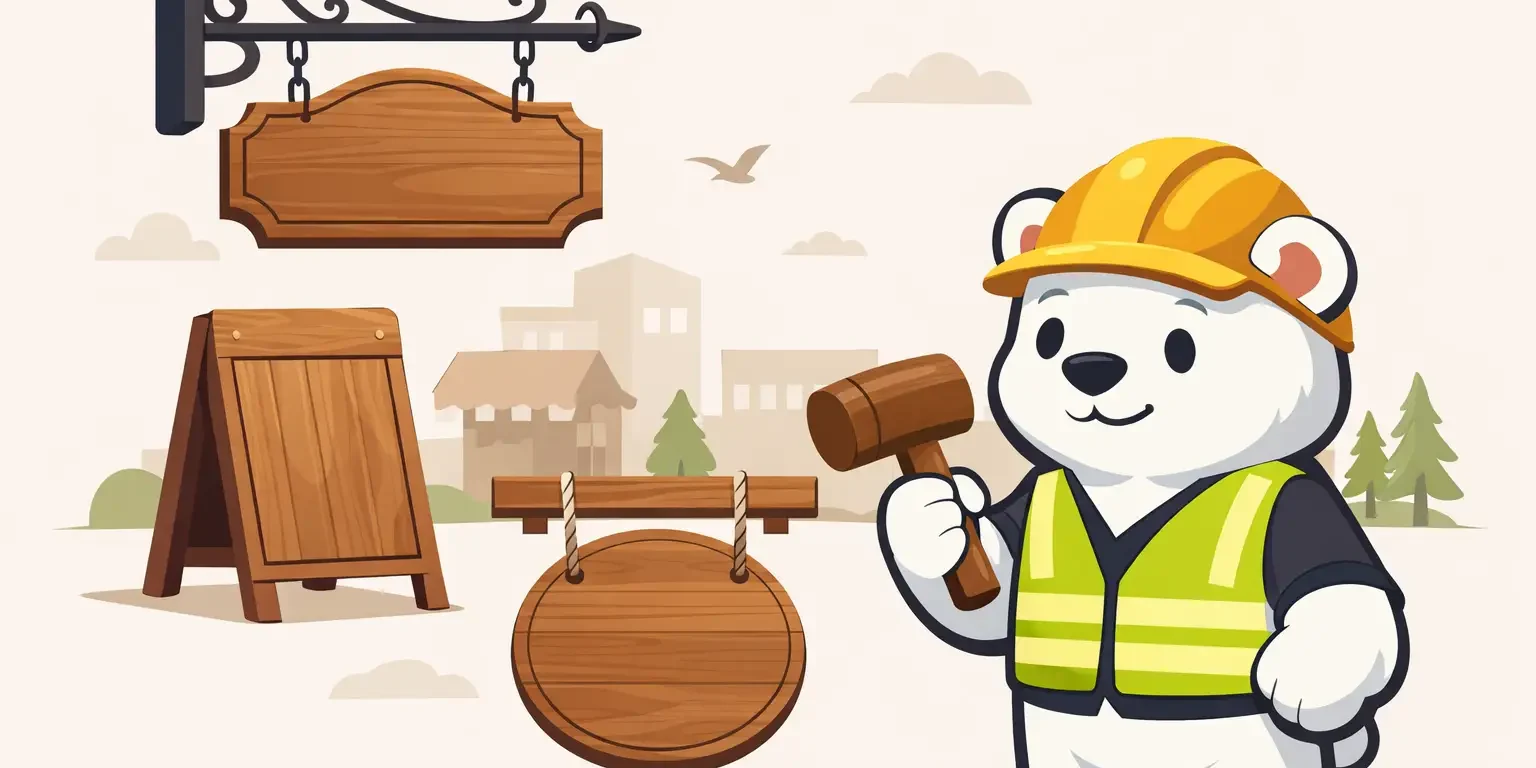
A painted timber fascia above a shopfront, a routed welcome board at a business park entrance, or a carved plaque outside a country pub all do the same job in slightly different ways – they make a place feel established before anyone walks through the door. That is why traditional wooden signs still have a clear role in commercial environments. They are not only decorative. Used well, they support brand presentation, wayfinding and first impressions in a format that feels solid, familiar and credible.
For businesses choosing signage, the real question is not whether wood looks good. It usually does. The question is whether it suits the site, the brand and the practical demands of daily use. In some settings, traditional timber signage is exactly the right answer. In others, it works best as part of a wider signage scheme rather than the whole solution.
Where traditional wooden signs work best
Traditional wooden signs tend to perform well where character matters as much as visibility. Hospitality venues, farm shops, heritage attractions, garden centres, office courtyards, rural businesses and premium retail spaces often benefit from a more natural finish than powder-coated metal or standard printed panels. Estate and property signage can also suit wood when the aim is to convey quality and permanence rather than quick-turn promotional messaging.
They are equally useful for entrance signs, directional boards, commemorative plaques and branded exterior markers. In these applications, the material itself communicates something important. Wood suggests craftsmanship, longevity and attention to detail. For brands that want to appear established and approachable, that matters.
That said, context is everything. A busy industrial estate, a temporary construction site or a high-turnover promotional campaign may call for materials that are lighter, cheaper to replace or easier to standardise across multiple locations. Traditional wooden signs are often strongest when permanence and appearance carry more weight than short-term cost.
What businesses like about traditional wooden signs
The first advantage is visual character. No two timber boards look exactly the same, and that slight variation can be a strength. Grain, stain and carved detail give a sign depth that flat printed materials cannot always match. For businesses trying to avoid a generic look, that difference is useful.
The second is perceived quality. Customers often read timber signage as a sign of investment. A well-made wooden fascia or entrance board can make a business feel settled and trustworthy. That can be especially valuable in sectors where environment influences buying decisions, such as hospitality, leisure, retail and property.
There is also flexibility in finish. Traditional wooden signs can be painted, stained, varnished, carved, routed or combined with applied lettering and logos. That allows businesses to take a classic route or create something more polished and contemporary while keeping the warmth of wood.
From a branding point of view, this gives more room than people sometimes expect. A timber sign does not have to look rustic. It can be heritage-led, premium, understated or smartly corporate depending on the shape, typography, fixings and surface treatment.
The practical trade-offs to consider
Wood is not a fit-and-forget material. That is the main trade-off, and it should be considered early rather than after installation. Exterior timber signs are exposed to rain, UV, temperature change and surface wear. Even well-finished boards will need maintenance over time if they are to keep their appearance.
This does not make them a poor option. It simply means the product has to match the environment. A covered entrance sign will usually age differently from a freestanding roadside board exposed on all sides. A sheltered pub fascia may remain attractive for years with routine care, while a coastal or high-exposure site may need more regular refinishing.
There is also the issue of consistency across larger estates or multisite businesses. Natural materials can vary in tone and texture. That is part of the appeal, but for organisations with strict brand standards it may need careful management. If exact uniformity matters across dozens of locations, other materials may be easier to control.
Weight and installation should also be part of the decision. Solid timber signs can be substantial, particularly at larger sizes. Fixing methods, support posts and mounting surfaces all need to be appropriate for the sign’s size and location. For commercial buyers, that is one reason it helps to treat signage as a full project rather than a standalone board order.
Choosing the right timber sign for the setting
Not all wooden signs serve the same purpose, so the best result usually starts with the use case. An entrance sign for a business park or visitor attraction needs visibility at distance, clear proportions and a finish that can stand up to weather. A plaque outside an office or meeting space is more about detail, texture and neat presentation at close range.
Retail and hospitality often sit somewhere in the middle. The sign needs to work as branding, but it also has to be legible from the street and suitable for the building frontage. In listed or character properties, timber may be the most natural visual fit. In more modern settings, it can still work well when paired with clean-cut lettering and restrained design.
For wayfinding, readability should always come before decorative detail. A sign can look beautifully made and still fail if visitors cannot read it quickly from the right distance. This is where layout, letter height, contrast and positioning matter just as much as material choice.
Design matters more than the material alone
A poor design on timber is still a poor sign. Businesses sometimes focus heavily on the material because wood has obvious visual appeal, but the fundamentals remain the same. The message must be clear, the hierarchy must make sense and the sign must suit how people actually move through the space.
That means deciding what the sign is there to do first. Is it identifying the premises, attracting passing trade, helping visitors find departments, marking a route through a site, or reinforcing a premium brand position? Once that is defined, decisions around size, finish, lettering and installation become much easier.
This is also where practical experience counts. A sign seen from a passing car has very different design needs from one read at a reception entrance. A farm shop board on a rural road needs different visibility from a carved plaque in a courtyard. Getting those details right often matters more than whether the sign is stained oak or painted softwood.
Traditional wooden signs as part of a wider signage scheme
For many organisations, timber works best when it is used selectively. A wooden entrance feature can establish character at the front of a site, while other materials handle health and safety notices, car park information, internal wayfinding or temporary promotions. That mixed approach often gives the best balance between visual impact and operational practicality.
This is particularly relevant for larger businesses and multi-use sites. A warehouse, showroom and office may all sit on the same premises but have different signage needs. The frontage may benefit from a more considered timber sign, while loading areas and compliance signage require harder-wearing standard systems that are quicker to update.
A joined-up signage approach avoids the common problem of one attractive feature sign being surrounded by mismatched boards, faded notices and ad hoc messaging. Consistency across the whole site matters. The best result is usually a scheme where each sign type does its own job properly while still feeling part of the same brand environment.
What to ask before you commission one
Before ordering traditional wooden signs, it helps to be clear on a few practical points. Think about where the sign will sit, how exposed it is, how far away it needs to be read from and whether the message is fixed or likely to change. Consider maintenance expectations too. If the site team wants something with minimal upkeep, wood may still be suitable, but the finish and placement need careful thought.
It is also worth considering whether the sign is mainly decorative, mainly operational or both. When buyers are clear on that from the start, specifications tend to be more realistic. A decorative feature board can prioritise craftsmanship and finish. A directional or wayfinding sign needs to prioritise clarity and durability.
For organisations managing multiple requirements at once, working with a supplier that understands the wider signage picture can save time. Traditional wooden signs rarely exist in isolation for long. They usually sit alongside branded panels, safety messaging, window graphics, estate boards or internal displays, and the overall result is stronger when those elements are planned together.
A well-made timber sign will not suit every site, but where it fits, it does a job few other materials can match. It gives a business presence, personality and a sense of permanence – and those qualities are still worth investing in when you want a site to look considered from the very first glance.