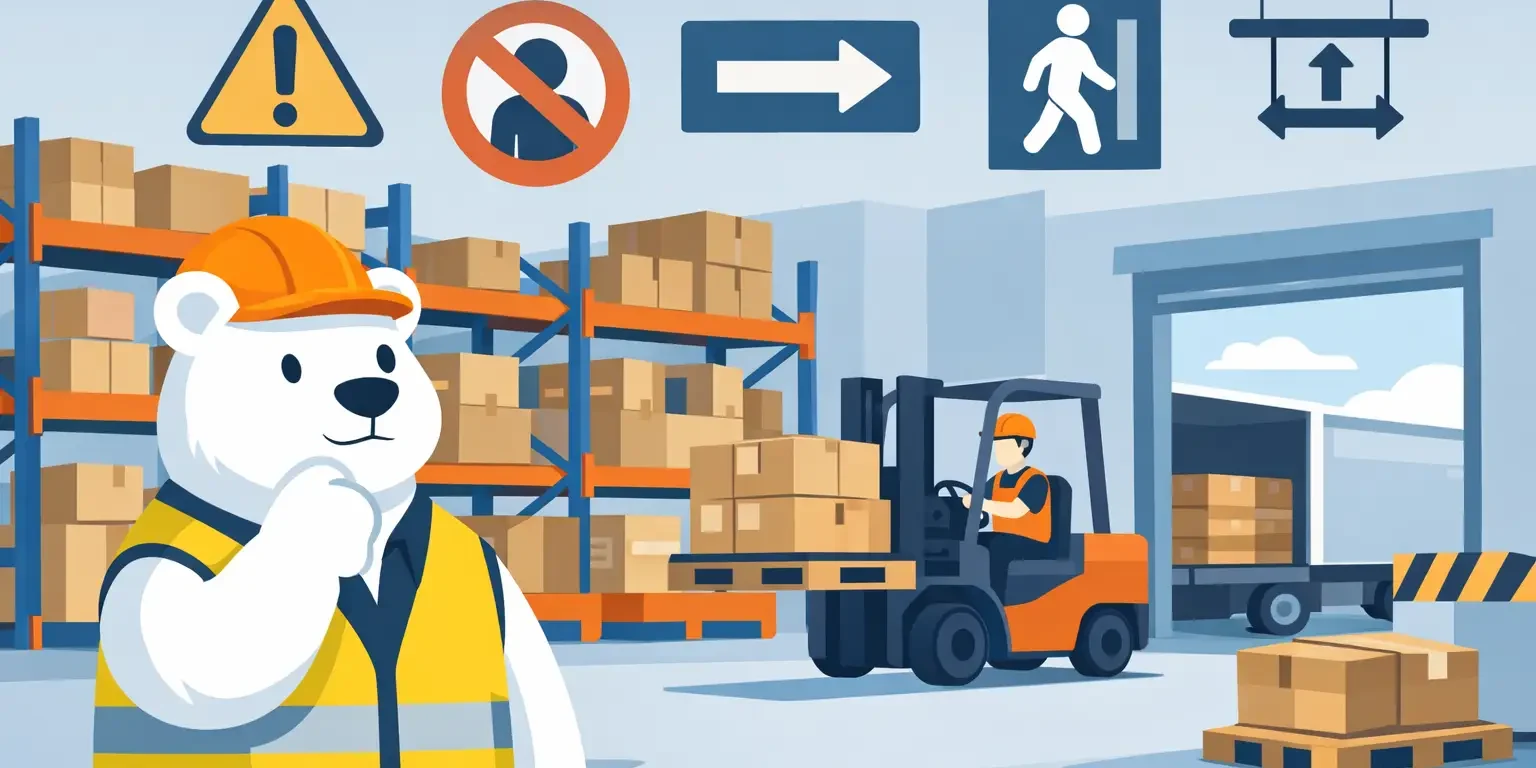
A warehouse without clear signage usually tells on itself within minutes. Vehicles hesitate at junctions, visitors head for the wrong door, picking errors rise, and safety procedures rely too heavily on verbal instruction. If you are asking what signage does a warehouse need, the real answer is not one sign or one category – it is a joined-up system that keeps people safe, supports workflow and makes the site easier to manage.
For operations teams, facilities managers and business owners, warehouse signage works best when it is planned around how the building is actually used. A busy distribution hub has different demands from a smaller storage unit or a mixed-use factory and warehouse site. The principle is the same, though. Signage should reduce uncertainty, support compliance and help staff, drivers and visitors move through the space with confidence.
What signage does a warehouse need for day-to-day operation?
Most warehouses need signage across five core areas: safety, traffic management, wayfinding, storage identification and operational instruction. Some sites also need branded external signs, customer-facing entrance signs or specialist labels for hazardous materials, temperature-controlled zones or restricted stock.
The mistake many businesses make is treating these as separate purchases rather than one environment. A warehouse can have perfectly compliant fire exit signs but still be hard to navigate. It can have racking labels but poor pedestrian segregation. Good signage closes those gaps.
Safety signage comes first
Safety signs are the starting point because they support legal duties and reduce avoidable risk. In warehouse settings, that usually includes fire exit signs, fire point signs, first aid signs, warning notices and mandatory PPE signage. If forklift movement is part of daily operations, pedestrian warning signs and vehicle hazard signs are equally important.
The right mix depends on your layout and processes. A warehouse with loading bays, battery charging areas and packing stations needs more than a basic set of wall-mounted notices. You may also need floor graphics, hanging signs and barrier markings so the message is visible where decisions are made, not just at the entrance.
Visibility matters as much as wording. If a sign is mounted too high, hidden by stock or inconsistent with the rest of the site, people stop noticing it. That is why material choice, size and placement should be considered early, especially in large spaces with long sight lines or changing stock profiles.
Fire and emergency signs
Every warehouse should have clear emergency escape signage that matches the building layout and can be understood quickly under pressure. Fire exits, assembly points, alarm call points, extinguishers and refuge areas all need proper identification.
This is one area where cutting corners causes problems later. If routes change after a refit or racking expansion, the signage needs updating as well. A once-correct sign in the wrong place is more than untidy – it can misdirect people in an emergency.
Mandatory and warning signs
Warehouses commonly need signs covering hard hats, hi-vis clothing, safety footwear, hearing protection or eye protection, depending on the environment. Warning signs often cover forklift lorries, uneven surfaces, overhead loads, restricted access and authorised personnel only areas.
The balance here is practical. Too few signs leave risk unmanaged, but too many create visual noise. The aim is a site where critical messages stand out and are placed at the point of action.
Traffic management signage prevents costly confusion
Where people and vehicles share space, traffic signs are essential. Internal and external warehouse traffic routes often need speed limit signs, one-way signs, stop and give way signs, loading bay markers and directional signage for HGVs, vans and staff parking.
A good traffic system does more than reduce accident risk. It keeps deliveries moving, cuts delays at busy times and helps new drivers understand the site quickly. This is especially useful for warehouses with frequent third-party couriers or visiting contractors who may only arrive once and will not know your layout.
Floor markings are often part of the same conversation. Pedestrian walkways, forklift lanes, no-go areas and waiting zones are far easier to follow when wall signs and floor graphics work together. In practice, the strongest warehouse signage schemes combine both.
Wayfinding signs save time every day
Large warehouses can be difficult to read, particularly when they have multiple entrances, mezzanines, office areas, goods-in, goods-out and shared welfare spaces. Wayfinding signs make the building easier to use for everyone, from warehouse operatives to visitors and auditors.
This usually includes entrance signs, reception signs, arrows to despatch and collections, toilet and welfare signs, office identification and door signs for restricted rooms. In a multi-zone operation, suspended aisle markers and large-format area signs are often more useful than small wall plates because they can be seen from a distance.
Good wayfinding has a direct operational value. It reduces interruptions, cuts the number of times staff are stopped for directions and presents a more organised image to customers, drivers and inspectors.
Storage and inventory signage supports accuracy
Warehouse signs are not only about safety. They also support stock control, picking efficiency and internal organisation. Racking labels, bay markers, shelf identification, pallet location signs and zone numbering all help teams find items faster and reduce handling errors.
For businesses managing high stock volumes, this can have a bigger day-to-day impact than almost any other signage category. Clear identification shortens training time for new staff, improves pick routes and makes cycle counts more straightforward.
The detail matters here. Labels need to be durable enough for the environment, easy to scan if barcodes are used, and consistent across the site. If the warehouse includes cold storage, dusty production areas or outdoor compounds, the specification should reflect that. Paper labels or lightweight temporary signs may be cheaper at the start, but they rarely perform well in harder-working conditions.
Operational signs help standardise behaviour
Many warehouses also need process-led signage that explains how work should be carried out in a specific area. That can include loading procedures, waste segregation signs, battery charging instructions, machine operating notices, hygiene controls and quality checkpoints.
These signs are especially useful where different teams, shifts or contractors use the same space. Instead of relying on verbal handovers, the building itself reinforces the correct process. That improves consistency and can reduce the need for repeated supervision.
In some environments, these signs also support wider business goals. If your warehouse is part of a retail, manufacturing or food supply chain, operational signage can reinforce traceability, cleanliness, inspection routines and product handling standards.
External warehouse signs still matter
The inside of the building usually takes priority, but external signs should not be overlooked. Site entrance signs, directional boards, loading bay signs, branded fascia signs and delivery instructions all shape first impressions and site efficiency.
For shared industrial estates or larger business parks, external signage can be the difference between smooth arrivals and vehicles blocking the wrong access point. Clear signs outside the building save phone calls, prevent missed collections and help present a more professional operation.
This is also where branding and function can work together. A warehouse sign does not need to be decorative to look professional. Clean, well-made external signage shows that the site is managed properly and gives suppliers, visitors and customers more confidence from the outset.
Choosing the right format and materials
What signage does a warehouse need in practical terms? Often, more than one format. Wall signs are useful for fixed instructions, but high-level banners, suspended signs, floor graphics, rigid boards, labels and decals all have their place.
Material choice depends on wear, cleaning routines, lighting and viewing distance. A sign in a busy loading area may need tougher construction than one in an internal office corridor. Aisle signs need to be readable from range. Floor graphics need slip-resistant finishes and good adhesion. External signs need to cope with British weather, not just look good on installation day.
This is where working with an experienced signage partner helps. The right supplier will not just print artwork. They will help match message, material and placement to the environment so the signage lasts and does its job properly.
A warehouse sign plan works better than one-off orders
If your site has grown over time, signage often becomes inconsistent. Different colours, different formats and ad hoc messages create clutter. It still counts as signage, but it does not work as a system.
A proper warehouse sign plan brings the site together. It sets priorities, identifies gaps, standardises design and makes future additions easier. For businesses operating across multiple units, this consistency is even more valuable because teams can move between sites without relearning the basics.
SignsDisplay.com supports businesses that need this wider view – not just individual signs, but practical, fit-for-purpose solutions across safety, display, directional and branded environments.
Before ordering anything, it is worth walking the site as if you are a new starter, a visiting driver and a fire marshal on the same day. The signs you need usually reveal themselves quite quickly. The best warehouse signage is not there to decorate the walls. It is there to make the whole operation clearer, safer and easier to run.