

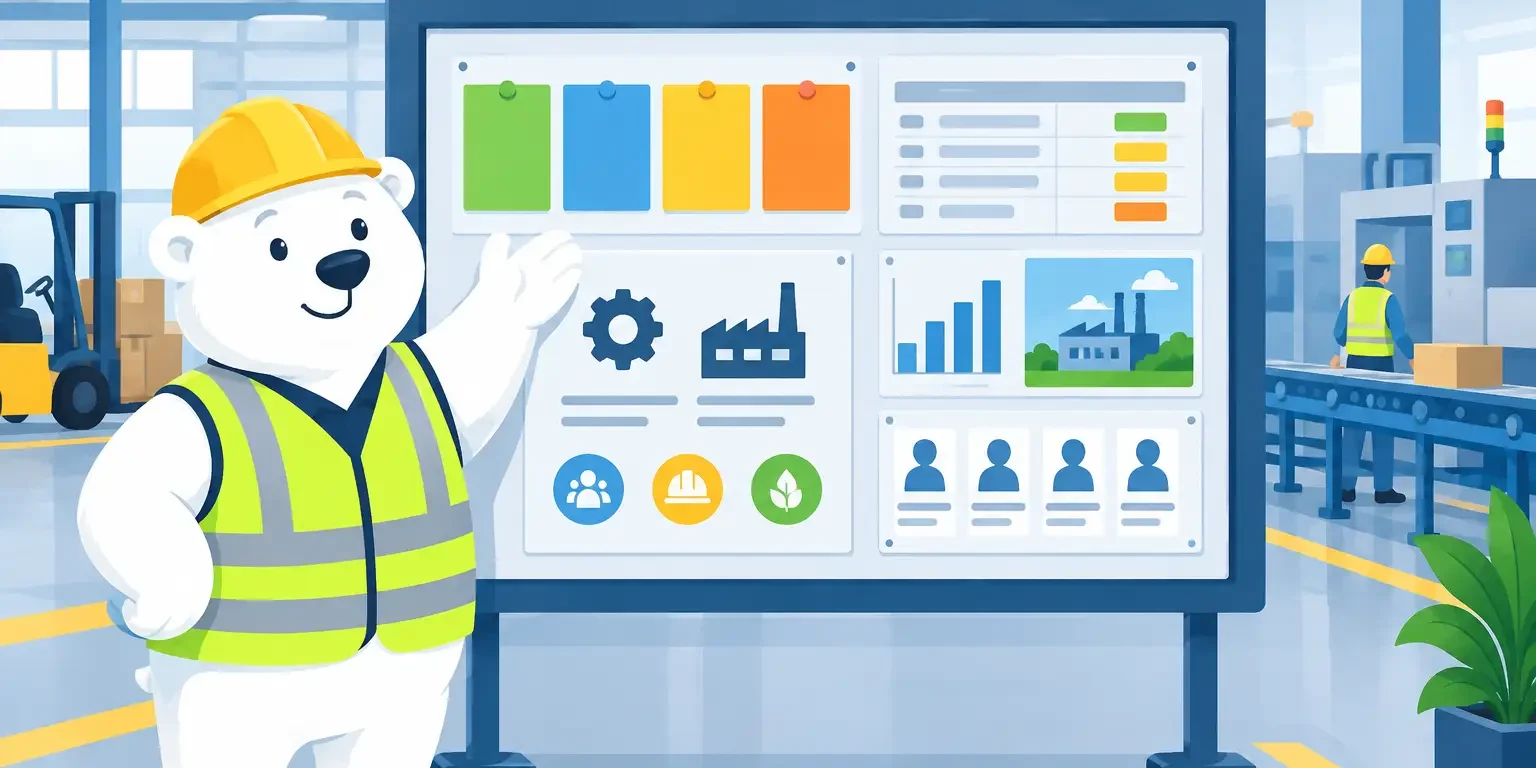
A missed shift update, an out-of-date safety notice or a quality target buried in an email can quickly become a production problem. Factory information boards put the details people need where work actually happens, giving teams a clear point of reference before small misunderstandings become delays, rework or avoidable risk.
For factories and warehouses, a well-planned board is not simply a noticeboard with a company logo. It is a practical communication tool that supports safe working, daily performance, staff engagement and consistent standards across the site.
What factory information boards need to achieve
The most effective factory information boards answer a simple question: what does this person need to know at this point in their working day? That may be a change to a process, the current production plan, a safety alert, key quality measures or who to contact if there is a problem.
When information is scattered across printouts, digital screens and informal conversations, it is easy for messages to be missed. A visible board creates one agreed place for essential updates. This is particularly useful where teams work across shifts, operate in busy, noisy areas or do not routinely use a desk or company email account.
The goal is not to display every policy and announcement available. Too much content makes a board harder to use. Good workplace communication is selective, current and clearly organised, so the most important message can be understood in seconds.
Choosing the right factory information boards
The right format depends on the environment, the information being displayed and how often it changes. A board near a production line has different requirements from one in a reception area, canteen or dispatch bay.
For frequently updated information, framed poster holders, clip frames, magnetic whiteboards and dry-wipe boards allow supervisors to replace documents or add shift notes without reprinting a complete panel. Magnetic surfaces work well for production schedules, team updates and visual management systems, while lockable noticeboards help protect important documents in accessible or public-facing areas.
For fixed messages, printed rigid panels are often the better choice. Health and safety rules, mandatory PPE requirements, pedestrian routes, site maps and emergency instructions need to remain clear and durable. Foamex, aluminium composite and other suitable sign materials can be printed in full colour and finished for the conditions in which they will be used.
There is also a strong case for combining permanent and changeable elements. A branded header and fixed safety information can sit alongside replaceable inserts for daily targets, toolbox talks or improvement notices. This keeps the board professional while allowing it to remain useful day after day.
Consider the working environment
A board that looks good in an office may fail on a factory floor. Dust, moisture, temperature changes, forklift traffic and regular cleaning all affect material and fixing choices. In high-traffic locations, a rigid mounted board with protected poster pockets may provide better long-term value than paper notices attached with tape.
Positioning matters just as much. Boards should be installed where staff naturally pause: near clocking-in points, entrances to work areas, break rooms, goods-in locations or team meeting spaces. Avoid locations with poor lighting, visual clutter or restricted access. If people cannot comfortably stop and read the information, the board is unlikely to do its job.
Design for quick decisions, not decoration
A factory information board should be easy to scan from a short distance. Clear hierarchy, legible type and disciplined use of colour matter more than visual effects. Your brand colours can bring consistency across the site, but they should never reduce contrast or make key safety messages harder to spot.
Start with a clear board title that reflects its purpose, such as “Production Performance”, “Site Safety Updates” or “Team Communications”. Divide the space into defined areas so staff know where to find a particular type of information. For example, one area may cover daily output, another quality performance, and another current safety notices.
Keep individual messages concise. A short heading, date and clear action will generally be more effective than a dense page of text. Where a process needs explaining, use diagrams, photographs, icons or colour-coded stages alongside plain language. Visual communication is especially valuable in multilingual teams, but it should support, rather than replace, clear written instructions.
Use colour with purpose. Red may be appropriate for urgent restrictions or hazards, amber for matters needing attention and green for approved processes or positive performance. This approach must be applied consistently. Random colours and mixed styles make a board look untidy and force readers to work harder to understand it.
Content that earns attention
Staff will only keep checking a board if they trust the information on it. Dates are essential. An undated notice can appear current long after it has stopped being relevant, while old papers left in place quickly undermine confidence in the whole display.
Useful content will vary by site, but factory information boards often bring together four core areas: safety, quality, performance and people. Safety content may include near-miss learning, PPE reminders, emergency contacts and current risk controls. Quality sections can show defect trends, customer requirements or inspection points. Performance areas may display shift targets, order priorities and improvement measures. The people section can cover training dates, staff recognition, welfare information and updates that affect working arrangements.
Not every measure needs to be public. If performance data could cause unnecessary pressure or reveal commercially sensitive information, consider what level of detail is appropriate for the location. Team-level visuals are often more constructive than singling out individuals, especially when the aim is to encourage problem-solving rather than blame.
A board can also support continuous improvement when it gives staff a visible route to raise ideas. A simple section for improvement suggestions, actions in progress and completed changes shows that feedback is being heard. The important part is follow-through. A display full of old suggestions with no response sends the opposite message.
Make ownership part of the system
Even the best-produced board becomes ineffective if no one updates it. Before installation, agree who owns each section, how often it will be reviewed and what should be removed. In many sites, the supervisor or shift lead updates daily information, while health and safety, HR or quality teams maintain their specialist sections.
Build the review into existing routines rather than treating it as an extra task. A five-minute check before a shift briefing can be enough to remove expired notices, add new information and check that documents are clean and readable. If several departments contribute, set simple standards for paper size, date format, approved templates and where content should be placed.
Physical condition also communicates something. Torn posters, faded print and curled corners suggest a lack of care, even when the information itself is accurate. Durable materials, proper fixings and easy-to-change poster holders reduce this issue and make maintenance less time-consuming.
Working with a signage supplier
A capable signage partner can help turn a rough idea into a practical, site-ready system. That starts with understanding the board’s purpose, dimensions, wall surface, update frequency and operating environment. It may involve producing a single board for one department or a coordinated set for production, warehouse, welfare and visitor areas.
Consistency is valuable across larger premises or multiple sites. Matching headers, colours, layouts and materials help staff recognise the purpose of each display immediately. It also means future panels, replacement graphics and revised inserts can be produced without starting again from scratch.
For businesses managing several communication needs, it is often more efficient to coordinate factory boards alongside safety signs, wayfinding, wall graphics, labels and vehicle or site branding through one experienced production partner. This reduces fragmented ordering and helps maintain a consistent standard across the workplace.
The best factory information boards are the ones staff use without being prompted. Give each board a clear job, keep it current and place it where the work happens. When information is visible, relevant and properly maintained, it supports better conversations on the floor and more confident action throughout the shift.


