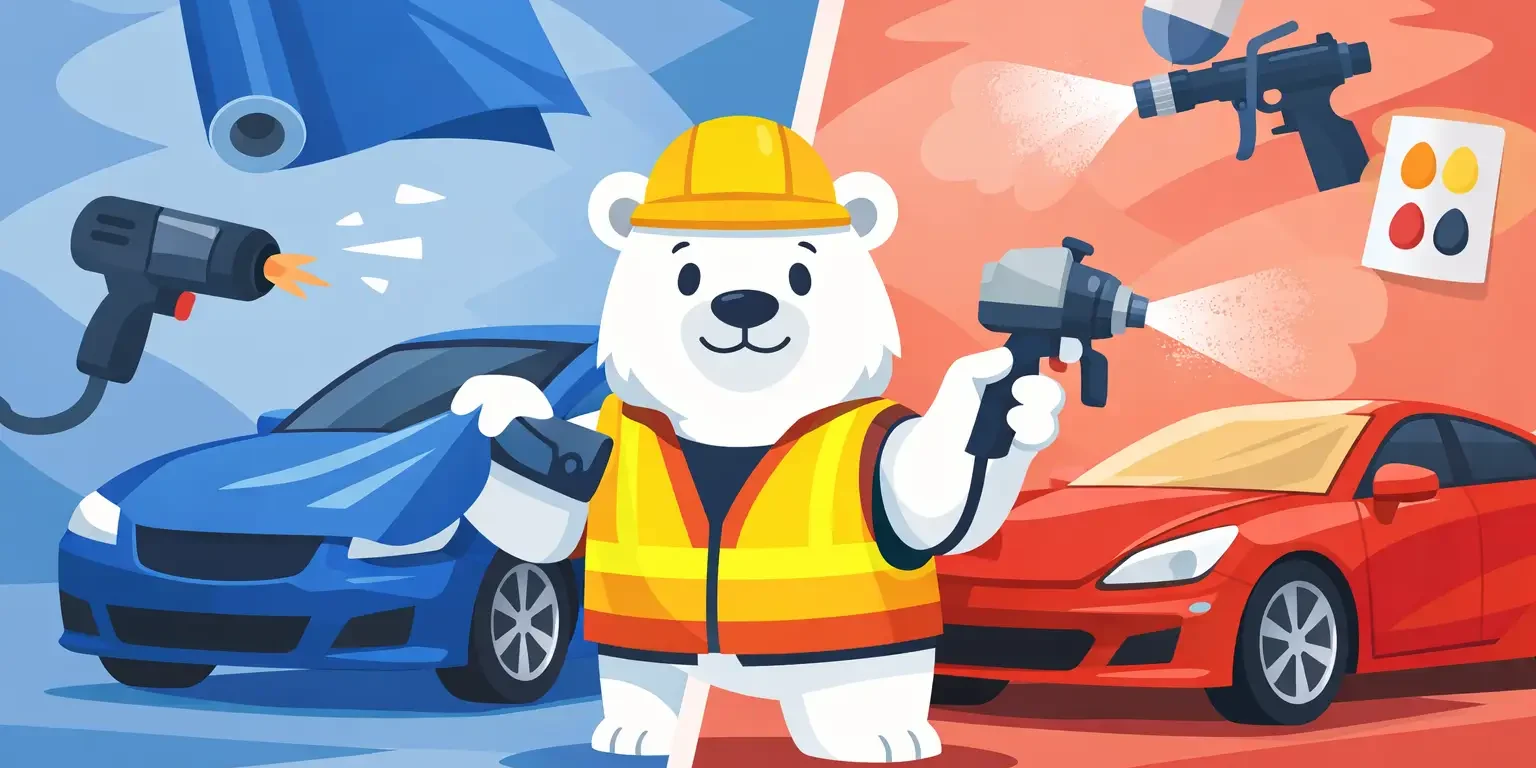
A van off the road for a few extra days does not just delay a job – it can affect deliveries, site visits and how your brand appears in front of customers. That is why vehicle wrapping vs spray painting is not simply a design choice. For most businesses, it is a practical decision about downtime, cost, durability and how hard that vehicle needs to work as a branded asset.
If you manage a fleet, run a retail operation, oversee facilities or need one dependable branded vehicle for customer-facing work, both options have a place. The right choice depends on what you need the finish to do, how long you plan to keep the vehicle and whether branding flexibility matters as much as appearance.
Vehicle wrapping vs spray painting – what is the difference?
Spray painting changes the vehicle itself. The paint is applied directly to the bodywork, whether that is a full respray, a panel repair or a colour change. It is a more permanent route and is often chosen when the main goal is restoration, repair or a long-term change to the base finish.
Vehicle wrapping applies printed or coloured vinyl over the existing paintwork. That can be a full wrap, a partial wrap or cut vinyl graphics. It is widely used for commercial branding because it allows detailed designs, strong colour control and the option to remove or update graphics later.
For a business vehicle, that distinction matters. Paint is about altering the vehicle. Wrap is about using the vehicle as a branding surface while protecting the original finish underneath.
When wrapping makes more sense for business use
For most commercial vehicles, wrapping is the more practical option. The reason is simple: it works harder as a branding tool.
A sprayed finish can give you a new colour, but it will not easily deliver logos, campaign artwork, contact details, product imagery and location messaging in one consistent application. A wrap can. That makes it particularly useful for estate agents, trade firms, delivery fleets, retail support vehicles and site-based businesses that want every mile to reinforce the brand.
Wraps also tend to involve less disruption. A vehicle can often be designed, produced and fitted on a shorter programme than a full respray, especially when specialist paint preparation and curing time are factored in. If keeping vehicles moving is a priority, that reduced downtime can be more valuable than the finish itself.
There is also more flexibility in lifecycle planning. If branding changes, a service expands, a phone number updates or a vehicle is being prepared for resale, the vinyl can usually be removed or replaced without the permanence of a paint job. For businesses that refresh their fleet every few years, that flexibility is often a deciding factor.
Where spray painting still has the advantage
Spray painting is not the wrong option. It is just a different one.
If a vehicle has damaged panels, faded lacquer, corrosion issues or visible wear that need proper bodyshop correction, paint may be essential. Wrapping over poor surfaces is rarely a good idea because vinyl depends on a sound substrate. If the bodywork is compromised, repairs need to come first.
Paint can also be the better route when the aim is a lasting colour change rather than a branded graphic treatment. Some organisations want a fleet in a single corporate colour with minimal markings. In that case, paint may suit the brief, particularly if the vehicle will stay in service for many years and the branding itself is unlikely to change.
There is also the matter of finish expectations. A high-quality respray on a prepared surface can achieve excellent visual results, especially on restoration projects or premium vehicles where the bodywork itself is the focus. For branding-led commercial use, though, that is not always where the best value sits.
Cost, downtime and whole-life value
Cost comparisons can be misleading if they only look at the upfront figure. The better question is what each option costs over the life of the vehicle.
A wrap is often more cost-effective for branded commercial use because design, graphics and colour can be handled together. With spray painting, adding branding usually means extra stages afterwards, such as decals or lettering. That can turn one process into two.
Downtime matters just as much as invoice price. If a van is off the road, your team may need cover vehicles, rescheduled work or adjusted routes. For a single vehicle business, even a short delay can have a direct operational cost. For a fleet, that impact multiplies quickly.
Wraps also support resale and reallocation. In many cases, removing the vinyl reveals the original paintwork beneath, which may have been protected from daily UV exposure and minor surface wear. That can help preserve appearance and make the vehicle easier to repurpose or sell on.
Paint has its own long-term value when the vehicle genuinely needs refinishing anyway. If bodyshop work is required regardless, combining repair and repainting may be sensible. The key is not to treat wrapping and painting as interchangeable when the vehicle condition says otherwise.
Durability in real working conditions
Business vehicles do not live easy lives. They sit in car parks, loading bays and roadside locations. They collect dirt, take knocks from daily use and spend long hours exposed to weather.
A professionally applied wrap can perform very well in those conditions, but durability depends on material quality, surface preparation and how the vehicle is used. A wrap on a sales car driven mainly on local roads has a different life expectancy from graphics on a hard-worked site van or delivery vehicle. Edges, recesses and high-contact areas will always see more wear.
Spray paint can also wear, chip or fade, particularly on heavily used vehicles. Neither option is immune to damage. The practical difference is in repair and update strategy. Localised wrap sections can often be replaced without redoing the entire vehicle, while paint repairs may need blending and colour matching across surrounding panels.
For fleets, that maintenance point can be significant. If a vehicle picks up damage, a quick partial graphic replacement may be more manageable than bodyshop scheduling.
Branding control and consistency
This is where wraps usually pull ahead.
For businesses operating across multiple vehicles, sites or regions, consistency matters. You want the same colours, messaging and presentation whether the vehicle is parked outside a branch, attending a property viewing or arriving at a warehouse. Printed wraps and vinyl graphics give much tighter control over that outcome.
That is especially useful when vehicles form part of a broader visual programme including signage, boards, window graphics, display materials and site branding. Working with one production partner can make it easier to keep colours, artwork and messaging aligned across every touchpoint.
Spray painting can support consistency in base colour, but it is not as adaptable when graphics become more detailed. If you need promotional campaigns, temporary messages, service-specific branding or seasonal updates, paint quickly becomes restrictive.
Which option is right for your vehicle?
If your priority is commercial branding, flexibility and keeping vehicles productive, wrapping is usually the stronger choice. It is designed for visibility, faster updates and practical use across working fleets.
If your priority is bodywork restoration, a permanent colour change or correcting damaged surfaces before anything else, spray painting may be necessary first. In some cases, the best answer is a combination – body repairs and paint where needed, followed by branded vinyl graphics or a partial wrap.
That is why the starting point should always be the actual vehicle, not just the artwork. Condition, usage, branding needs and expected lifespan all shape the right recommendation.
For many UK businesses, from estate agents and retail operators to factories, warehouses and construction firms, the vehicle is both transport and advertisement. It needs to look right, stay practical and support the wider brand without creating avoidable downtime. A capable supplier will look at all of that, not just the finish in isolation.
If you are weighing up vehicle wrapping vs spray painting, the best decision is usually the one that matches how the vehicle works for your business day to day. A smart finish matters, but a vehicle that protects your brand, keeps moving and can adapt as your business changes will usually deliver more value over time.