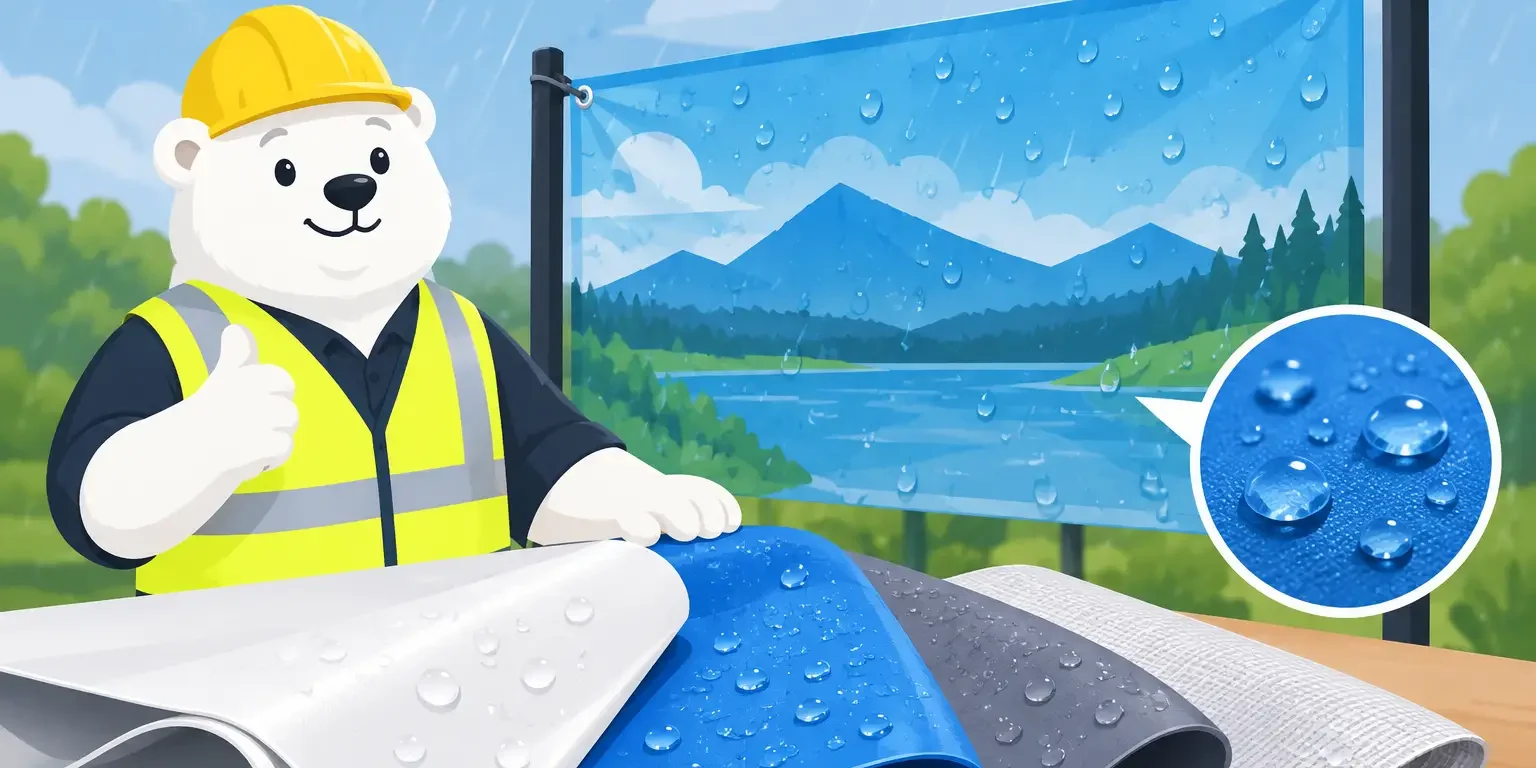
A banner can look excellent when it leaves the printer and still fail its first week outside if the material is wrong. When customers ask which banner material is waterproof, the dependable answer for most external applications is PVC vinyl. But choosing the right banner also means allowing for wind, fixing method, print visibility and how long it needs to remain in place.
For a retail promotion, estate agency development, construction perimeter or factory site notice, waterproofing is only one part of the job. The best material is the one that stays readable, presentable and securely fitted in its working environment.
Which banner material is waterproof?
PVC vinyl banner is the standard waterproof choice for outdoor printed banners. It is a synthetic material with a solid PVC face, designed to resist rain and surface moisture. Printed correctly and finished to suit the installation, it is suitable for short-term campaigns as well as longer-running commercial displays.
Standard PVC banner material is commonly supplied in weights such as 440gsm or 510gsm. The heavier option generally offers a more substantial feel and may be better suited to demanding locations, repeated handling or longer-term use. Weight alone does not decide whether a banner will perform well, however. A banner stretched across an exposed fence needs a different specification from one fixed to a sheltered shopfront wall.
PVC is waterproof rather than merely water-resistant. Rain does not soak through the face of the banner, and the printed graphic remains visible after wet weather. That makes it a practical option for promotional banners, event signage, site information, branded fencing and sales messages where outdoor exposure is expected.
PVC banners: the reliable all-weather option
A solid PVC banner delivers strong colour, sharp printed detail and a smooth surface that is easy to wipe clean. It is often the right choice where a message needs to be seen clearly from a distance, such as a roadside promotion, a large-format retail offer or a development marketing display.
For businesses managing several locations, PVC also provides useful consistency. The same artwork, colour treatment and finishing approach can be applied across a campaign, helping marketing teams maintain a professional appearance without having to source different materials for each site.
There are limits. Solid PVC does not allow wind to pass through it. In a very exposed position, wind pressure can put strain on the banner, eyelets and supporting structure. A heavier banner is not automatically the answer if the installation itself is unsuitable. Correct sizing, appropriate fixing points and sensible tension are just as important as the material.
Blockout PVC for double-sided displays
Where a banner will be viewed from both sides, blockout PVC is often worth considering. This material has an internal layer that reduces show-through, preventing the print on one side from affecting the appearance of the other.
It is waterproof and particularly useful for pole-mounted banners, hanging displays, temporary barriers and freestanding applications where two-sided messaging matters. It is usually more substantial than standard banner vinyl, so the fitting arrangement should be planned accordingly.
Mesh PVC for windy locations
Mesh banner is also made from PVC and is suitable for wet conditions, but its perforated construction changes how it performs. Small holes allow air to pass through the material, reducing wind loading on fencing, scaffolding and other exposed frameworks.
This is often the better waterproof banner material for construction sites, perimeter fencing and elevated installations. It remains weather-resistant in use because the PVC material itself does not absorb water, although the open structure means it is not a solid rain barrier.
The trade-off is print impact. Mesh can make graphics appear slightly less solid or vivid at close range than a smooth PVC banner. From normal viewing distances, well-prepared artwork remains highly effective, but very small type, fine detail and pale colours need careful consideration. For site branding, safety messaging and large logos, mesh is frequently the sensible balance between visibility and wind performance.
Are fabric banners waterproof?
Not all fabric banners are waterproof. Many polyester display fabrics are intended for indoor exhibitions, point-of-sale displays and portable systems. They may tolerate a brief shower, but they can absorb moisture, become heavier when wet and take time to dry. That makes them a poor choice for permanent or unsupervised external displays unless the supplier has specified an outdoor, waterproof fabric.
Some specialist textile materials have water-repellent coatings and can be suitable for selected outdoor flags or branded displays. These can offer a softer look and may pack down well, but they require a clear understanding of expected weather exposure, print method and lifespan. Water-repellent is not always the same as waterproof.
If a banner needs to keep rain out, rather than simply remain usable after rain, solid PVC is usually the more appropriate choice. Fabric is more often selected for appearance, portability or an exhibition-style finish than for all-weather durability.
The finish can affect outdoor performance
A waterproof banner material still needs the right finishing. Eyelets, hems, pole pockets and reinforced edges should suit the size of the banner and the way it will be installed. A large banner with too few fixing points can flap excessively, even if the PVC itself is perfectly suited to wet weather.
Hems reinforce the edge and can improve strength where tension is expected. Eyelets allow banners to be secured to railings, fencing or frames, while pole pockets are useful for hanging or mounting arrangements. For high-wind sites, fixings should be assessed as part of the whole display system, not added as an afterthought.
It is also worth remembering that eyelet holes create openings in an otherwise waterproof sheet. That is rarely a concern for normal banner use, but it matters if the banner is being considered as a rain screen or temporary cover. A printed banner is designed to carry a message outdoors, not replace purpose-made weatherproof sheeting.
Match the material to the site
For sheltered outdoor walls, shopfront promotions and estate agency marketing, standard PVC banner is typically the best starting point. It offers strong print quality, reliable rain resistance and good value for campaigns that need a clean, professional finish.
For exposed fencing, hoarding and scaffolding, mesh PVC deserves serious consideration. It lets wind through while still carrying a clear branded message, helping to reduce unnecessary strain on the installation. On busy construction sites, this practical difference can be more valuable than the slightly smoother appearance of solid vinyl.
For a two-sided banner, choose blockout PVC where the rear of the print must not be visible from the front. For indoor displays, fabric may be the more appropriate material, especially when a premium textile appearance or lightweight portability is the priority. The location and expected conditions should always lead the decision.
Questions to ask before ordering
Before approving artwork, establish where the banner will be fitted, whether the position is sheltered or exposed, how long it will stay up and what it will be fixed to. These details help determine whether standard PVC, mesh or blockout is the right choice.
Also consider viewing distance. A banner on a warehouse fence may need large type and high-contrast branding, while a shopfront banner can carry more detailed promotional information. Good material selection and suitable artwork work together. One cannot fully compensate for weaknesses in the other.
For multi-site campaigns, it is useful to specify materials and finishing consistently from the outset. That makes reorders simpler, supports a uniform brand presentation and reduces the risk of a location receiving an indoor-grade product where an outdoor banner was required.
SignsDisplay.com Ltd can help businesses match banner material, print specification and finishing to the site rather than supplying a one-size-fits-all product. The result is a display that is easier to install, clearer to read and better suited to the conditions it will face.
The practical choice is straightforward: use solid PVC when rain protection and print quality are the priority, use mesh PVC where wind is the greater challenge, and only select fabric outdoors when it has been specified for that purpose. A short conversation about the location before production can prevent a banner becoming an expensive replacement job after the first spell of bad weather.