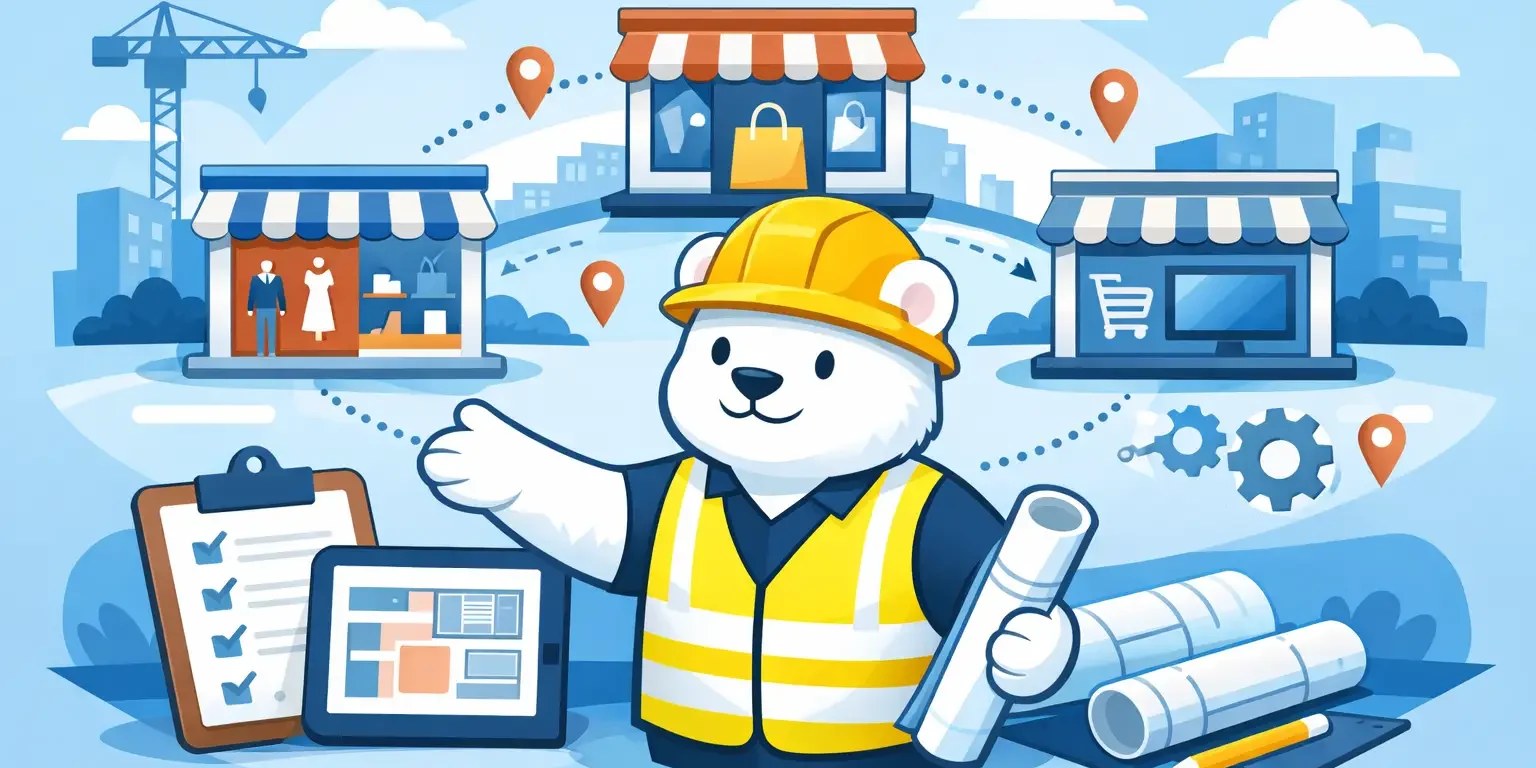
When a retail launch slips, it is rarely because one sign was printed late. More often, the problem sits in the handover between design, print, site surveys, delivery, installation and store readiness. A good retail branding rollout guide helps you control that chain from the start, so your fascia, window vinyls, POS, wayfinding and promotional graphics land on site in the right order and in the right format.
For retail operators, marketing teams and property managers, the challenge is not simply getting branded materials produced. It is getting them produced consistently across one store, ten stores or a national estate, while dealing with different unit sizes, landlord rules, access limits and launch dates. That is where rollout planning becomes a commercial job, not just a creative one.
What a retail branding rollout guide should cover
At a practical level, a retail branding rollout guide should connect brand standards to real sites. That means taking artwork and campaign intent, then translating both into physical items that suit each location. A high street unit with restricted glazing, for example, will need a different approach from a retail park store with wider frontage and more parking-side visibility.
This is where many projects become fragmented. One supplier handles signage, another prints POS, another fits graphics, and someone internally tries to keep the timetable together. The result is often inconsistent finishes, duplicated effort and store teams chasing updates they should not have to manage.
A stronger approach is to treat the rollout as one joined-up programme. The brief should include permanent branding such as fascia signs, wall graphics and directional signage, alongside campaign-led items like window posters, hanging banners, shelf edge messaging and counter displays. If branded packaging, labels or support print are also part of the customer experience, they should be planned at the same time rather than added later.
Start with the estate, not the artwork
Retail teams often begin with approved visuals and then ask how quickly they can be produced. In reality, rollout success starts with understanding the estate itself. Store age, frontage type, fixing conditions, electrical supply, access times and local restrictions all affect what can be manufactured and installed.
A single artwork file may look tidy on paper, but physical environments are not standard. Some sites need illuminated signage, some need non-illuminated tray signs, and some may require temporary boards while landlord approval is pending. Window campaigns might need solid vinyl in one location and perforated film in another, depending on light levels and visibility.
That does not mean brand consistency has to suffer. It means consistency needs to be defined properly. Consistent branding is not always identical branding. It is a controlled family of applications that present the same brand clearly, even when site conditions vary.
Site surveys save time later
A proper survey stage avoids expensive rework. Measurements, photographs, fixing details and risk considerations should be captured before production begins, not after materials have already been booked. For larger estates, surveys also help group stores into similar types so production can be planned more efficiently.
This stage matters just as much for temporary retail display as it does for permanent signs. Freestanding displays, promotional frames and exhibition-style systems all need the right footprint, stability and positioning. What looks good in a concept visual can become a problem if it blocks circulation space or staff access.
Build the rollout around critical path items
Not every branded item has the same lead time. Fascia signs, fabricated lettering, bespoke display hardware and specialist finishes often need more planning than posters, banners or straightforward vinyl graphics. If the whole schedule is built around the easiest items, the opening date can still be missed.
The critical path should be led by the most complex components, especially where fabrication, approvals or installation access are involved. From there, campaign graphics, promotional print and support materials can be phased in around them.
For example, a new store opening may require external signage and statutory wayfinding installed first, then internal wall graphics, then POS and launch-day materials. A refit may need overnight work in a live environment, with one set of graphics removed and the next installed in a tight handover window. These are very different rollout scenarios, even if the brand assets are similar.
Allow for approvals and change control
Retail programmes often slow down because approvals happen in too many places. Marketing signs off the design, property signs off the site, procurement signs off the cost and operations signs off the access window. None of that is unusual, but it needs a clear route.
If there is no change control, one amendment can ripple through artwork, materials, packing lists and install schedules. That is particularly risky when multiple stores are involved. A dependable rollout partner will track versions, flag conflicts early and help prevent old files being produced against new instructions.
Production consistency matters more than most teams expect
A brand can lose impact very quickly when production standards shift from site to site. Differences in colour, material finish, mounting method or trim accuracy are noticeable to customers, especially in retail. The issue is not only appearance. It also affects durability, maintenance and replacement planning.
This is why in-house production capability makes a real difference. When signage, graphics, display and support print can be managed through one experienced production team, there is tighter control over specification and output. It is easier to maintain consistency in colour matching, substrate selection and finishing, and easier to solve problems before they become site issues.
It also simplifies procurement. Instead of managing several product-specific suppliers, retail teams can coordinate one broader package covering shop signs, printed display, window graphics, boards, vinyls, labels and branded support materials. That reduces admin, but more importantly it reduces gaps between responsibilities.
A retail branding rollout guide for live trading environments
Rolling out branding into live stores is a different job from fitting out an empty shell. Access windows are tighter, customer disruption matters, and health and safety controls need to be observed without slowing the project unnecessarily.
In these settings, the best plans are practical rather than theoretical. Materials should be specified for quick installation where possible. Graphics should be packed by store and by area. Fit teams should know what gets removed, what stays in place and what has to be protected during works. If overnight or early morning access is required, that should be built into scheduling from the outset.
Trade-offs are part of the process. A premium finish may look better, but if it extends lead time beyond the campaign window, it may not be the right answer. Equally, the cheapest material is not always the most cost-effective if it needs replacing after a short period in a high-traffic environment. Good rollout planning weighs speed, durability, finish and budget together.
Logistics are part of the brand result
Packing, labelling and delivery sequencing are often treated as back-end admin. In reality, they directly affect execution. If store kits arrive incomplete, mixed up or without clear identification, installation time is lost and launch-day pressure rises.
For multi-site programmes, each location should receive a clearly allocated package with matching documentation. That sounds basic, but it is one of the quickest ways to keep site teams focused on readiness rather than troubleshooting. For UK-wide retail estates, this level of coordination is especially valuable when access windows vary by landlord, shopping centre or local operating hours.
Measuring a rollout properly
A rollout is not successful simply because everything was printed. The real test is whether stores opened or refreshed on time, whether the branding looked consistent, and whether materials performed as expected once in use.
Post-project review helps tighten future programmes. Which sites needed exceptions? Which materials worked best in practice? Where did approvals stall? Which items were over-specified, and which needed upgrading? These questions help refine future store openings, seasonal campaigns and wider estate refreshes.
This is also where an experienced supplier becomes more than a manufacturer. A hands-on production partner can feed practical learning back into the next phase, whether that means changing a fixing method, simplifying artwork setup or adjusting specifications for better longevity.
If you are planning a retail branding rollout, the strongest starting point is not a long wish list of products. It is a clear plan for how your brand will be produced, delivered and installed in real retail conditions – with enough flexibility to handle site differences without losing control of the finished result. Get that right, and the rollout stops being a scramble and starts working like part of the brand itself.