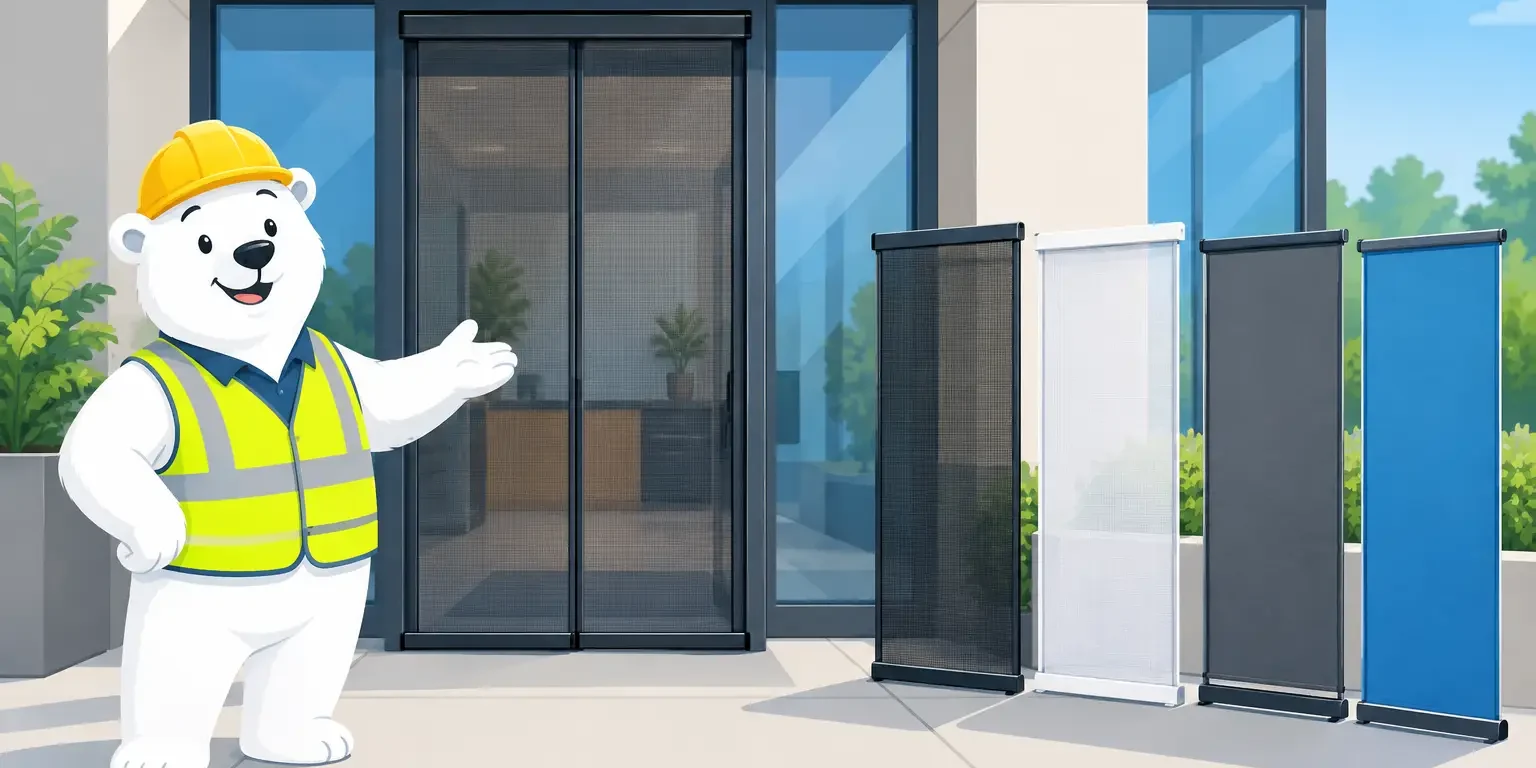
A business entrance has a job to do before anyone reaches reception, the shop floor or a sales desk. It needs to look welcoming, reinforce the brand and give visitors clear direction. A door screen banner can do all three without taking over the space, making it a practical choice for retail premises, offices, showrooms, estate agency branches and temporary sales environments.
The best result is not simply a large graphic placed near a door. It is a display chosen for the available space, the flow of people and the message that genuinely needs to be seen. Get those details right and an entrance becomes easier to navigate and more recognisable to customers, staff and visitors.
What is a door screen banner?
A door screen banner is a printed display designed to sit in, beside or immediately around an entrance. Depending on the setting, it may be a freestanding banner system, a tensioned fabric graphic, a panel fixed to a screen or a more temporary promotional display. Its purpose can range from advertising an offer to identifying a department, communicating visitor instructions or creating a branded divide within an open doorway.
This flexibility is useful where permanent signs are not the answer. A retailer may need to change campaign messaging regularly. A property developer may need a branded display at the entrance to a sales suite. A warehouse or factory may need to separate visitor routes from operational areas while keeping essential information visible. In each case, the display must work with the building rather than obstruct it.
Where door screen banners add value
Entrances are often busy, awkwardly shaped and shared by several audiences. That is exactly why a well-planned banner can earn its place. It puts communication where people naturally pause, queue or make a decision about where to go next.
In retail, a door screen banner can introduce a seasonal promotion, new range or service before customers enter. It can also bring consistency to branches where window space, frontage and internal layouts vary. For office settings, a screen banner can support reception branding, announce a visitor check-in point or make a temporary event area feel properly organised.
Estate agents and housebuilders can use entrance displays to carry development branding, key contact details and viewing information in sales offices or marketing suites. For factories and warehouses, the priority may be clearer operational messaging: visitor reception, PPE requirements, delivery instructions or segregated access. The design approach changes, but the principle remains the same: make the next action obvious.
Choosing the right door screen banner format
There is no single best format for every doorway. The right choice depends on whether the display is permanent or temporary, how much room is available and how often the message will change.
Freestanding displays for flexible campaigns
Freestanding roller banners and fabric systems work well when a campaign, promotion or event needs to move quickly between locations. They can be positioned just inside an entrance, moved when footfall patterns change and stored between uses. This makes them particularly useful for retail launches, exhibitions, recruitment days and short-term property marketing.
The trade-off is that freestanding displays need a stable, sensible position. They should not narrow escape routes, create a trip hazard or sit where opening doors and heavy footfall will knock them out of place. A compact base and the right graphic width can make a significant difference in tight reception areas.
Tensioned graphics for a more polished finish
Fabric screen systems and tensioned graphics create a clean, continuous visual surface. They are a strong option for customer-facing entrances, showrooms and hospitality-style spaces where presentation matters as much as the message. The printed fabric is typically easier to transport than rigid boards and can be changed when branding or campaigns move on.
These systems suit businesses that want a larger visual statement without committing to permanent wall graphics. They also work well as a backdrop behind a reception or welcome point, provided the message remains readable from the approach route.
Rigid panels and branded screening
Where a door screen needs to withstand regular contact or stay in place for longer periods, rigid printed panels can be the better fit. They can be applied to existing screens, fitted as part of a partition or produced as standalone branded boards. This approach is useful for workplace zoning, construction site offices, warehouse entrances and public-facing counters.
Rigid materials provide structure, but they are less adaptable once installed. They are most effective when the core message will remain relevant for a long time, such as a company identity, safety instruction or directional message. If promotions change every month, a replaceable graphic system is usually more economical and easier to manage.
Start with the entrance, not the artwork
A common mistake is approving artwork before considering the physical setting. A strong design on screen can fail if it is hidden by an open door, lost against a busy background or positioned too far from the people it is intended to reach.
Measure the clear space around the entrance, including the door swing, access routes, reception furniture and any fire exit requirements. Consider where visitors approach from and how quickly they will pass the display. Someone walking from a car park may have time to read a headline and directional cue. A customer entering from a pavement may only register a bold offer, logo or call to action.
Viewing distance should guide type size and content. Short headlines, clear branding and one focused instruction usually outperform a crowded layout. A door screen banner is not a leaflet. If visitors need detailed terms, product specifications or a long list of services, direct them to a counter, QR code or another display once they are inside.
Build the message around a single purpose
The most successful entrance graphics make one main promise or give one clear instruction. For a shop, that could be “New season now in store”. For an office, it may be “Visitor reception”. For an industrial site, it may be “All visitors must report here”. Combining every message into one display can dilute the result and make essential information harder to spot.
Brand consistency matters too. Use the approved logo, colours, typography and imagery so the entrance feels connected to your vehicles, printed materials, internal signs and online marketing. This is especially valuable for multi-site organisations, where customers should receive the same confident first impression whether they visit Hull, Sheffield, Preston or another branch location.
Where safety or access information is involved, clarity takes priority over promotional styling. High contrast, straightforward wording and recognised symbols can help visitors act correctly without needing to ask for assistance. A well-designed display supports staff by reducing avoidable questions and missed instructions.
Plan for durability and everyday use
Doorways experience more wear than most display locations. They are exposed to hands, bags, trolleys, wind from opening doors and the occasional hurried delivery. Material choice should reflect that reality.
An indoor reception display may only need a lightweight fabric or banner cassette. A display near an external entrance, loading bay or busy public access point may need more substantial materials, a protected position and secure fixing. If the graphic is likely to be moved regularly, portability and quick assembly matter. If it will remain in one place for months, a fitted system can offer a neater, more dependable finish.
Cleaning is another practical consideration. Choose finishes that can be maintained appropriately for the environment, particularly in retail, healthcare-adjacent premises, food production settings and customer-facing workplaces. Discussing use conditions before production helps avoid a display that looks good on day one but is unsuitable for the site.
Make installation part of the decision
A banner that arrives on time but does not fit the doorway is not a successful project. For larger systems, multiple locations or complex branded screens, surveying and installation planning can save time later. It also helps ensure the display works alongside existing signs, security equipment, automatic doors and visitor management points.
SignsDisplay.com can support the process from artwork and material selection through to print production and installation-related requirements. That joined-up approach is useful when an entrance project forms part of a wider rollout involving window graphics, wayfinding, safety signs, promotional print or workplace branding.
Before ordering, confirm who will assemble the display, where it will be stored and how replacement graphics will be handled. These operational details are often what determine whether a temporary campaign stays looking professional throughout its run.
A better first impression starts at the threshold
A door screen banner works hardest when it is treated as part of the visitor journey, not an afterthought beside the door. Choose a format that suits the site, give the message room to breathe and make sure the finished display can cope with day-to-day use. The result is an entrance that looks considered, communicates clearly and gives people confidence that they are in the right place.