A reception sign that looks excellent on screen can fall flat once it reaches the wall. Poor material choice, visible fixings or weak contrast can make even a well-designed brand feel temporary. Laser cut branded panels solve that problem by adding depth, precision and a more permanent finish to the places where customers, visitors and teams encounter your business.
For a retail unit, workplace, showroom, development site or warehouse, the right panel is more than decoration. It helps people identify the space, understand where to go and recognise the standard of the business behind it. The best results come from matching the panel material, construction and fixing method to the environment rather than treating every sign as a flat printed board.
Where laser cut branded panels make a difference
Laser cutting produces clean, highly accurate shapes from a range of suitable materials. It is particularly effective where a logo, lettering, motif or repeated pattern needs crisp detail that ordinary cutting methods may not achieve as neatly. Panels can be used as a complete branded feature or as part of a wider sign system including printed graphics, wall vinyl, wayfinding and illuminated lettering.
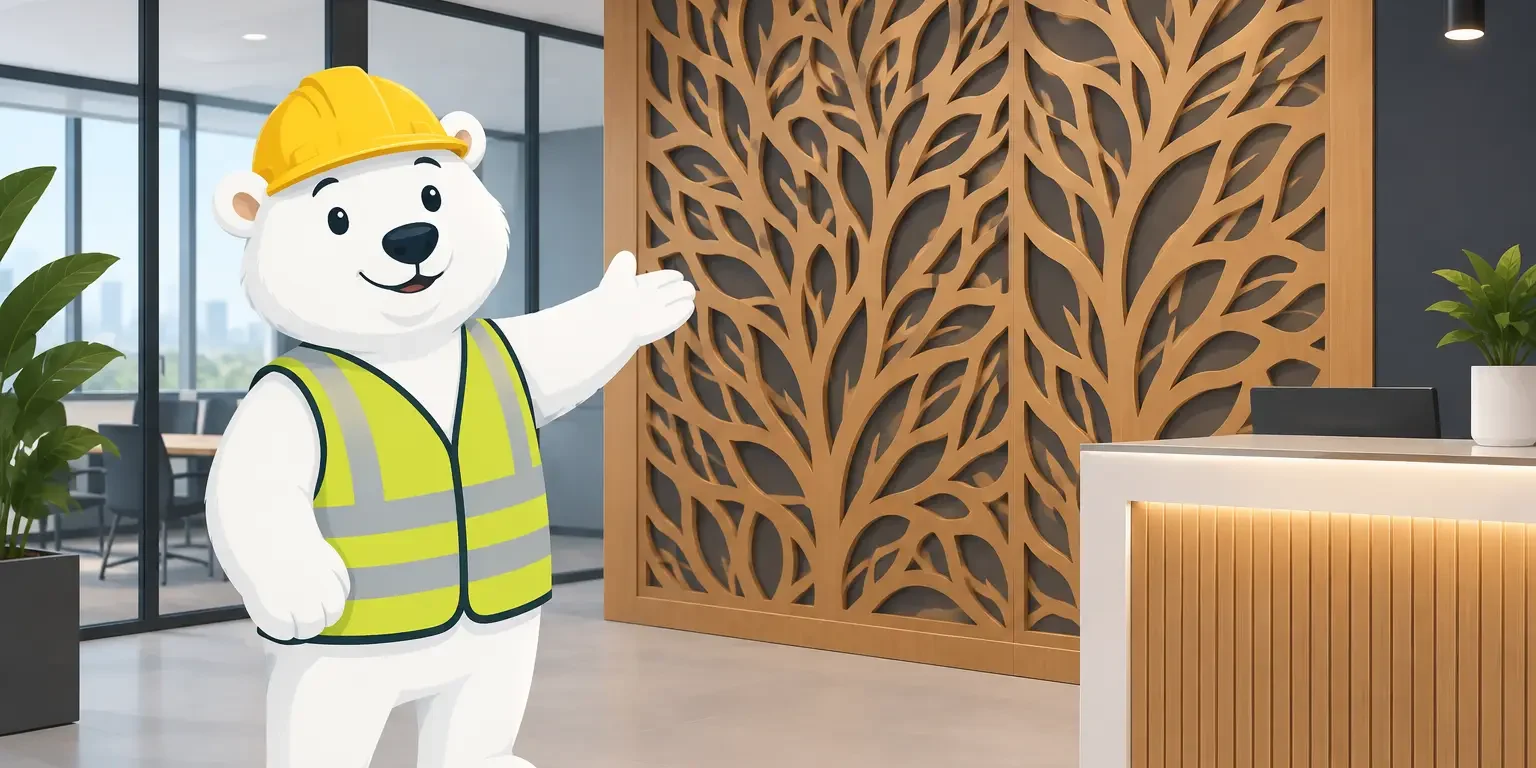
In reception areas, cut panels can give a company name or logo real presence. Raised lettering mounted onto a backing panel creates shadow lines and visual depth, while a full-size panel behind a desk can carry brand colours, a mission statement or a subtle patterned graphic. The approach suits offices, professional services firms, industrial businesses and shared workspaces where visitors need a clear first point of reference.
Retailers can use panels for fascia details, point-of-sale displays, product zones and changing-room signage. Because they can be cut to bespoke shapes, they are useful where a standard rectangular sign would feel out of place. Estate agents may use them within branch interiors or property marketing displays, while housebuilders can apply them in sales centres and show-home presentation areas.
Factories, warehouses and operational sites have a different requirement. Here, a branded panel may need to work alongside safety messages, directional signs and zoning information. A durable, easy-to-read panel can reinforce site standards while helping staff and visitors move safely through busy areas. Design still matters, but legibility, surface performance and appropriate installation matter just as much.
Choosing the right material for laser cut branded panels
The material sets the tone, but it also determines how the panel will perform. A refined internal reception installation and an external yard sign should not automatically use the same specification.
Acrylic is a popular choice for indoor branded panels. It offers a smooth, polished appearance and is available in a wide range of colours and finishes. Clear, frosted, gloss, matt and coloured acrylic can all be used to create different effects. Layering acrylic components is particularly effective for logos and lettering, as it allows designers to introduce contrast without relying solely on print.
Aluminium composite material is often selected where a lightweight, stable panel is needed. It provides a smart, flat face for applied graphics and cut elements, making it a practical option for displays, wall signs and certain external applications. Its suitability depends on the finished design, expected exposure and installation method, so it should be specified as part of the full project rather than in isolation.
Wood-based panels can bring warmth to hospitality, leisure, retail and office interiors. They work well for brands that want a natural or crafted appearance, although the finish needs to suit the conditions. A panel in a dry, customer-facing interior has very different demands from one placed near an entrance, loading area or workshop.
Metal finishes can provide a more architectural look. Brushed, powder-coated or painted elements can suit corporate interiors, premium retail environments and industrial settings where the brand needs a strong, durable presence. They may involve a higher budget and longer production route than basic printed signage, but the visual impact and service life can justify the investment.
The right decision depends on location, viewing distance, lighting, cleaning requirements and how long the panel is expected to remain in place. If a display is part of a short campaign, a cost-effective solution may be right. For a main reception wall or customer-facing fascia, it is usually worth specifying a finish that will continue to represent the business well after the launch period.
Printed detail, cut detail or both?
Laser cutting does not mean every element has to be one solid colour. Printed graphics can be applied to suitable panel materials, creating a useful combination of detailed imagery and dimensional shape. This works well for maps, timelines, branded illustrations and panels that need both close-up information and a strong visual outline from a distance.
A practical example is a reception feature with a printed background, a cut logo and raised acrylic lettering. The printed layer carries the colour and finer artwork, while the raised elements give the sign the depth that makes it stand out. For retail displays, cut shapes can frame promotional graphics or create reusable branded structures around changing campaign messages.
Design for the actual space, not just the artwork
The common mistake with branded panels is approving artwork without considering the wall, the light or the way people approach the sign. A dark logo on a dark panel may look sophisticated in a presentation but become difficult to see in a dim corridor. Fine lettering can lose impact when viewed from across a sales floor or warehouse aisle.
Start with the purpose of the panel. Is it intended to welcome visitors, direct people, identify a department, display a product range or reinforce the brand at a key touchpoint? One panel can do more than one job, but clarity should come first. If visitors cannot immediately understand the primary message, adding more visual detail will not improve the result.
Scale is equally important. A small logo placed too high on a large wall can appear lost, while oversized lettering may overpower a compact reception. Measuring the available area and considering sightlines before production helps avoid expensive changes later. This is especially valuable on sites with multiple locations, where a consistent design needs to fit different wall sizes and building layouts.
Colour should be assessed in the context of the material. A printed brand colour, coloured acrylic and powder-coated metal can look different under natural light, LED lighting or warm interior lighting. Where colour accuracy is important, samples and production advice help create a finish that is close to the intended brand standard.
Fixing methods affect the final impression
Fixings are not merely a practical detail. They influence how premium, permanent and tidy the panel appears.
Direct fixing is often suitable for functional signs and large-format wall panels where a close fit to the surface is required. Stand-off fixings create a gap between the panel and wall, producing a shadow effect that can make a simple design feel more considered. Concealed fixings offer the cleanest appearance, though they need appropriate planning around panel construction, wall type and access for installation.
Raised letters and logos can be bonded directly to the wall or mounted onto a backing panel. Direct wall mounting can look particularly sharp in a finished office or showroom, but the wall surface needs to be suitable and the positioning must be precise. A backing panel can be the better option where walls are uneven, temporary, difficult to repair or likely to change as the workplace develops.
For external installations, weather exposure, substrate condition and safe access need to be considered from the outset. A panel that looks right in a visual mock-up still has to withstand rain, wind, temperature changes and regular cleaning. On construction and industrial sites, it must also be placed where it will remain visible without creating an obstruction or safety issue.
Building a consistent branded environment
A laser cut panel is most effective when it forms part of a joined-up visual system. The reception feature should feel related to door signs, meeting room graphics, window vinyl, directional signage and display materials, even if each item uses a different production method. Consistency reduces the patchwork appearance that can develop when separate suppliers are used for every element.
For multi-site organisations, agreeing a core specification is particularly useful. This may cover approved materials, logo sizes, colours, panel layouts and fixing styles, with flexibility for each location. A compact branch reception, a large warehouse entrance and a retail concession do not need identical signs, but they should clearly belong to the same business.
Working with a supplier that can manage design, production and broader signage requirements also simplifies practical decisions. Panel dimensions can be coordinated with wall graphics and wayfinding, while materials can be chosen with installation conditions in mind. It keeps brand delivery more consistent and saves internal teams from managing several disconnected orders.
Plan for maintenance and future change
Even permanent-looking signage should allow for change. Departments move, product ranges evolve and brands refresh. Consider whether the panel needs replaceable sections, interchangeable graphics or a design that can be updated without replacing the entire installation.
Cleaning requirements should be discussed before manufacture, particularly in public-facing retail, food-adjacent areas, healthcare settings and industrial workplaces. Some finishes show fingerprints more readily than others, and heavily textured or layered designs may need more careful cleaning. A practical panel is one that continues to look professional under normal daily use, not just on installation day.
When planned carefully, laser cut branded panels become a hard-working part of the premises rather than a one-off design feature. Choose materials and construction that suit the real environment, give the brand enough scale to be seen, and make sure the finished panel supports the people who use the space every day.