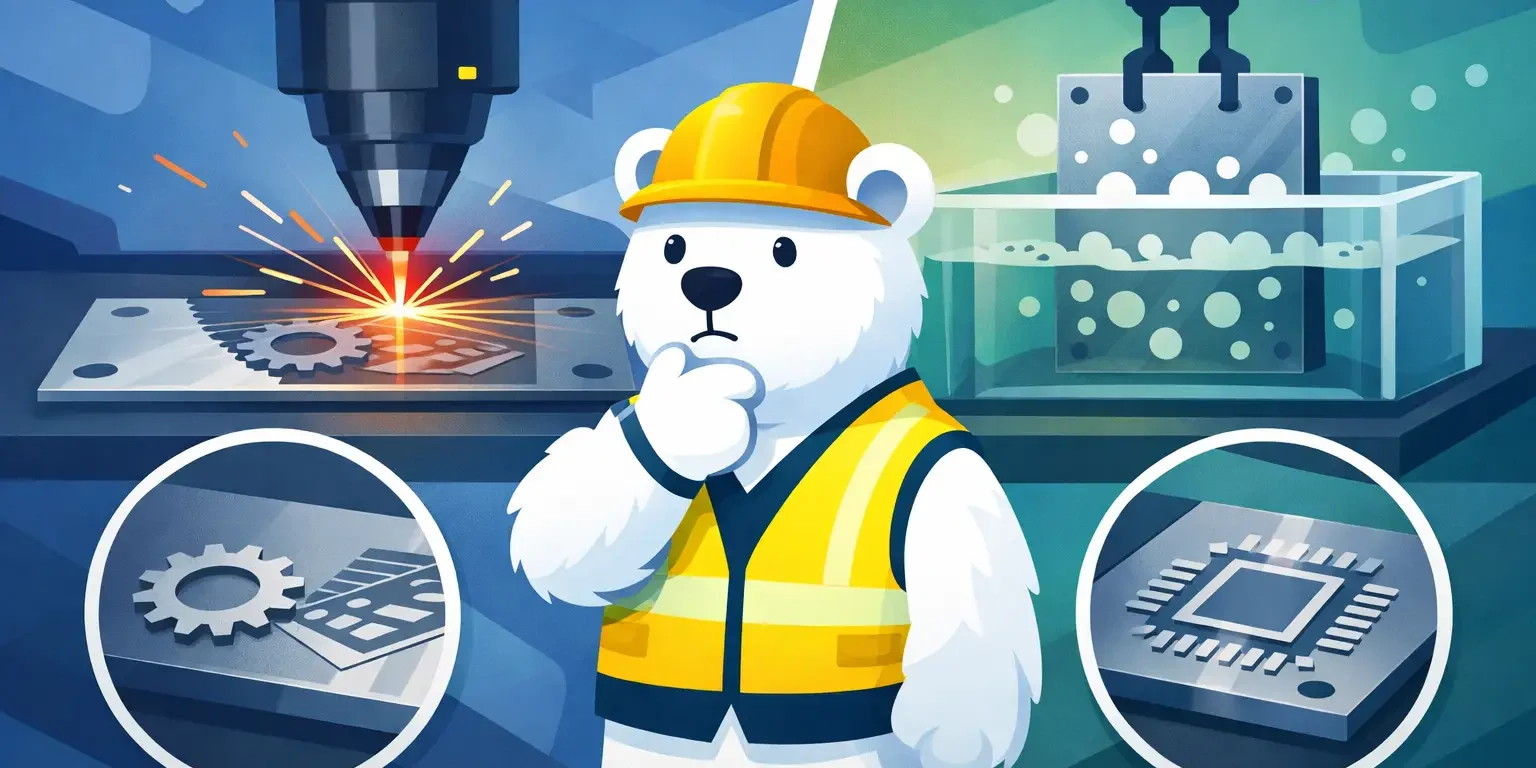
A machine plate on a factory line, a brushed brass reception plaque and a set of asset labels may all need permanent marking, but they do not necessarily need the same process. The choice between laser engraving vs chemical etching affects legibility, lead time, finish, material options and how well the finished item stands up to its working environment.
For business signage and identification work, the right answer is rarely about which method is universally better. It is about the material, the detail required, the quantity and where the finished piece will be used. A small batch of serial-numbered stainless steel labels has different demands from a decorative metal sign or a control panel with fine legends.
Laser engraving vs chemical etching: the working difference
Laser engraving uses a focused laser beam to remove, alter or mark the surface of a material. Depending on the material and laser settings, it can create a visible colour change, remove a coated top layer or engrave into the substrate itself. The process is digitally controlled, making it particularly useful for precise artwork, variable data, barcodes and short production runs.
Chemical etching, sometimes called photo etching, uses a resist pattern and chemical solution to remove exposed areas of metal. The result is a recessed design with crisp edges. It is commonly used on stainless steel, brass, aluminium and other metals where a refined, traditional or highly detailed finish is required.
The most obvious difference is how the mark is made. Laser engraving is a direct, heat-based process. Chemical etching removes metal through a controlled chemical reaction. That difference influences the edge quality, achievable depth, heat effect and suitability for certain materials.
When laser engraving is the practical choice
Laser engraving is often the most efficient option where speed, flexibility and individualisation matter. It can produce a one-off plate, a small set of safety labels or a larger batch of sequentially numbered tags without the setup associated with creating an etching resist.
For factories, warehouses and facilities teams, this is valuable when labels need unique information. Serial numbers, QR codes, equipment IDs, locker numbers, cable markers and changing asset records can be generated directly from a data file. Provided the code is sized and marked correctly for the intended scanner, laser engraving can deliver clear, repeatable identification.
It is also well suited to multi-layer engraving laminates. These materials have a coloured top layer and contrasting core, so the laser removes the surface to reveal high-contrast text and symbols beneath. This makes them a practical choice for internal signs, control panels, door plaques, wayfinding inserts and machine labels.
Laser engraving can work across a broad range of materials, including plastics, acrylic, wood, anodised aluminium, coated metals and selected stainless steels. Results vary considerably, however. A laser mark on anodised aluminium may be sharp and high contrast, while the same artwork on bare metal may need additional finishing to give the desired visual impact.
There are limits. Heat can affect sensitive materials, and deep engraving is slower than surface marking. Large filled areas may take longer to process than fine text, which can influence cost. If a premium metal face with a visibly recessed, tactile design is required, chemical etching may offer a more suitable finish.
Where chemical etching earns its place
Chemical etching is particularly strong for detailed metalwork. Fine text, intricate logos, delicate line art and closely spaced information can be reproduced cleanly because the process does not place cutting force on the metal. This is useful for detailed nameplates, high-specification control panels, branded plaques and technical identification plates.
The recessed design is also an advantage where durability matters. Once etched, the recessed areas can be colour filled to improve contrast. On a stainless steel or brass plate, this creates a smart, long-lasting result that works well in receptions, hospitality settings, commercial property and demanding industrial locations.
For larger quantities of the same artwork, chemical etching can become commercially attractive. The preparation stage takes time, so it is not always the quickest route for a single personalised label. But where many identical plates or panels are required, it can provide consistent quality across the run.
Chemical etching is not limited to flat decorative plaques. It can be used for equipment plates, instrument panels, fascia plates and specialist components. It is especially worth considering when the design must retain very fine detail and the base material needs to remain flat, without the potential distortion associated with mechanically removing material.
Its main trade-off is turnaround and setup. The process involves artwork preparation, masking and handling chemicals, so urgent one-off changes are generally more straightforward with laser engraving. Material choices are also more focused on metals, whereas laser systems can accommodate a wider mix of sign-making substrates.
Comparing finish, durability and readability
A decision based only on appearance can cause problems later. A good-looking plaque in a boardroom and a reliable asset tag beside a production line are both successful outcomes, but they need different priorities.
Laser engraving can deliver a clean, modern result, particularly on engraving laminate, anodised metal and coated surfaces. It is excellent for high-contrast functional marking. The finish may be shallower or more surface-based than an etched plate, depending on the material and laser process used.
Chemical etching creates a naturally recessed mark in metal. It has a more traditional, engineered appearance and can feel more substantial in the hand. Colour filling the etched areas improves visibility, while leaving the metal unfilled can produce a restrained, premium finish for interior branding.
Durability depends on more than the process. Consider abrasion, cleaning chemicals, ultraviolet exposure, moisture, temperature changes and whether the item will be handled daily. A suitable stainless steel etched plate can perform extremely well in harsh conditions. A correctly specified laser-engraved laminate is often a cost-effective, durable choice for indoor operational signage. Neither should be selected without considering the environment first.
Readability also comes down to contrast, viewing distance and available space. Fine engraving may look impressive at close range but fail when viewed from across a workshop or retail floor. For safety, operational and directional signs, clear lettering, sensible character height and strong contrast usually matter more than elaborate detail.
Cost and lead time: look beyond the unit price
The lower-priced option is not always the lower-cost solution. Laser engraving generally has minimal setup and makes variable information easy to manage. That often makes it the sensible choice for prototypes, replacements, urgent requests and short runs containing different data.
Chemical etching involves more preparation, so a one-off plate can carry a higher setup cost. As quantities rise, though, that setup is spread across the order. If the artwork is repeated and a detailed metal finish is the priority, etching may represent better value over a longer run.
Artwork quality has a direct effect on both methods. Supplying clear vector artwork, correct text and confirmed dimensions prevents delays. For technical labels, it is worth checking spelling, serial formats, logos, hole positions and any required standards before production begins. Reworking a batch of permanent plates costs more than taking a little extra care at approval stage.
Choose the process around the job
For fast-turnaround labels, individually numbered tags, QR codes, engraving laminates and mixed small batches, laser engraving is usually the more flexible route. It supports changing information efficiently and works well for everyday operational identification.
For detailed metal plaques, repeat runs, fine line work and a recessed premium finish, chemical etching is often the stronger choice. It is particularly effective when a plate needs to look as good in a client-facing reception as it performs in a technical setting.
There is also a middle ground. A project may use etched brass or stainless steel for permanent feature signage, then laser-engraved labels for back-of-house assets, plant rooms and replacements. Using each process where it works best can maintain brand consistency while keeping production practical.
The most useful starting point is to share the intended material, artwork, quantity, size and working environment with your signage supplier. A hands-on production team can then recommend a finish that suits the job rather than forcing every requirement into one method. The best marked plate is the one that stays clear, credible and fit for purpose long after it has been installed.