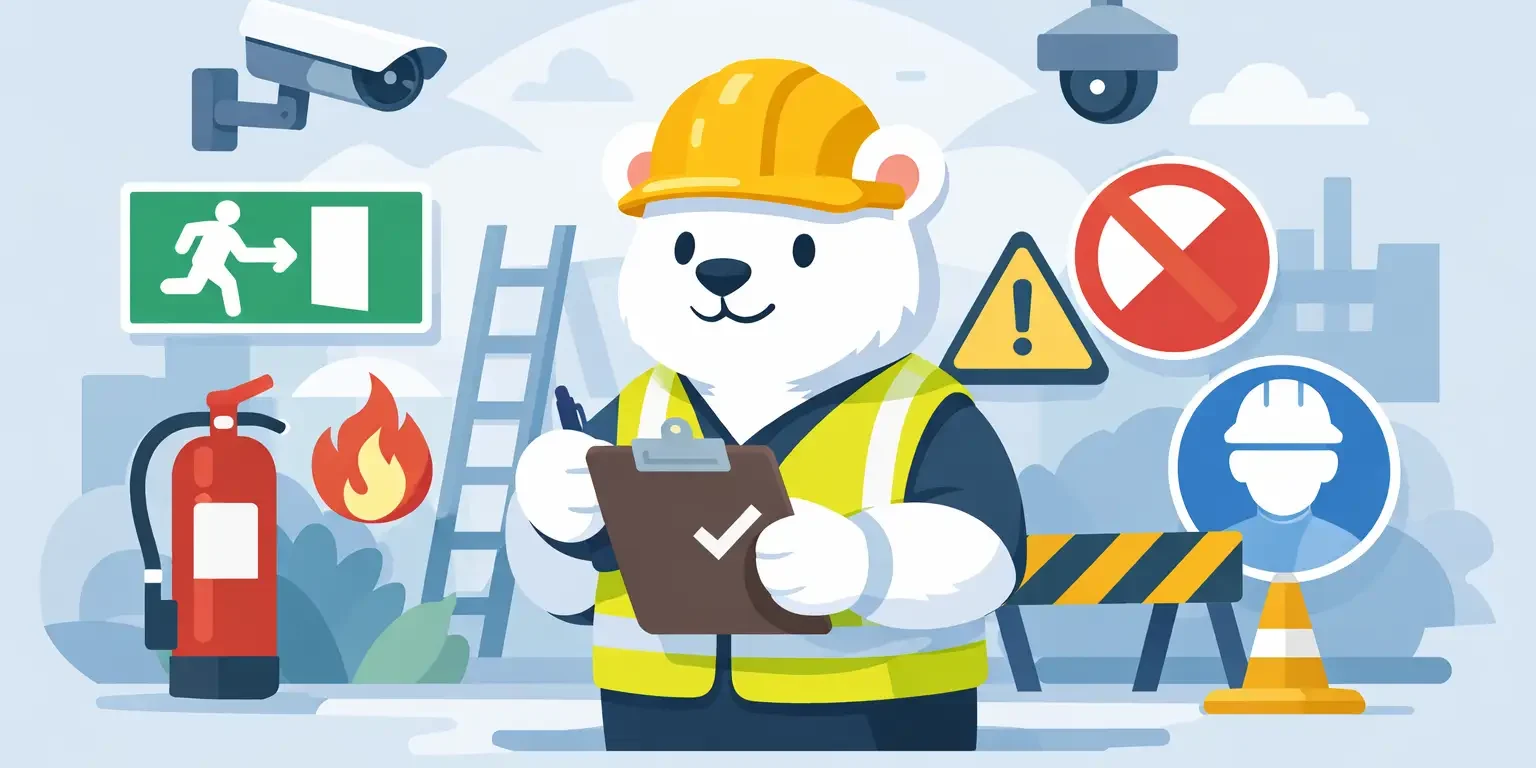
A faded fire exit sign in a warehouse or a missing PPE notice on a busy site can become a problem very quickly. A good workplace signage compliance guide helps you avoid that position by treating signage as part of everyday operations, not a last-minute purchase. For UK businesses, the aim is simple – signs should be clear, durable, correctly placed and suited to the environment they serve.
What workplace signage compliance really means
Compliance is not just about buying a standard pack of safety signs and fixing them to the nearest wall. It is about making sure people can understand hazards, instructions, restrictions and escape information when they need it. That includes employees, visitors, contractors and members of the public who may be on site.
In practical terms, compliant signage usually sits alongside your wider health and safety responsibilities, fire safety arrangements, accessibility considerations and site-specific risk assessments. A smart-looking sign that nobody can read from the right distance, or that peels away after a few months in a damp area, is not doing its job.
This is why signage decisions need a bit more thought than product selection alone. Material, size, finish, fixing method and location all affect whether a sign remains useful over time.
A workplace signage compliance guide starts with risk
The right signage for one workplace can be wrong for another. An office reception, a retail stockroom, a factory floor and a construction compound all have very different demands. The starting point should be your environment and the risks within it.
If there is a hazard that cannot be removed entirely by other control measures, signage may be needed to warn people clearly. If certain behaviours are mandatory, such as wearing eye protection or keeping fire doors shut, signs help reinforce those requirements. If access is restricted, directional and prohibition signage becomes part of how the site operates safely.
That also means there is a trade-off. Too few signs can leave gaps in communication, but too many signs create clutter and people stop noticing them. The best approach is purposeful signage – visible, relevant and limited to what genuinely helps people move, act and respond correctly.
The main sign categories most workplaces need
Most businesses will use a combination of safety and operational signs. Warning signs alert people to hazards. Mandatory signs tell people what they must do. Prohibition signs show what is not allowed. Safe condition signs identify exits, first aid points or assembly areas. Fire safety signs help people find alarms, extinguishers and fire equipment quickly.
Alongside those, many workplaces also need wayfinding, visitor information, traffic management, warehouse markings, door signs and branded communication panels. These may not all fall under one legal heading, but they still affect how safely and efficiently a site functions.
Placement matters as much as the sign itself
A compliant sign in the wrong place is often as ineffective as no sign at all. Signs should be positioned where the decision needs to be made, not somewhere convenient for installation. A forklift warning tucked behind a shutter opening is unlikely to be seen soon enough. A fire action notice hidden behind an open door is not much use either.
Viewing distance matters. So does lighting. In darker environments, reflective or highly visible materials may be the better option. In factories and warehouses, signs often need to be read from further away or above racking and machinery. In offices and customer-facing spaces, you may need a cleaner presentation that still meets its purpose without making the environment feel over-labelled.
Height and line of sight also make a difference. People should not need to hunt for critical information. If a sign communicates an emergency route, a site hazard or a mandatory control, it needs to be obvious at the point of need.
Materials and durability are part of compliance
One of the most common mistakes is choosing signage based on lowest initial cost rather than working conditions. A temporary printed notice may be perfectly suitable for a short-term office move. It is far less suitable for an outdoor yard, a washdown area or a production line exposed to chemicals, heat or abrasion.
Different workplaces need different solutions. Rigid boards, self-adhesive vinyls, engraved plates, floor graphics, wall-mounted panels and suspended signs all have their place. In a retail setting, appearance may sit higher on the priority list. In an industrial environment, durability and visibility usually lead. In many workplaces, you need both.
This is where supplier capability matters. If your site requires multiple sign types across indoor, outdoor and specialist environments, it helps to work with one production partner that can match materials to use case rather than forcing one format onto every application.
When temporary signage becomes a permanent problem
Temporary signs have a habit of staying up for years. Printed A4 notices taped to doors, handwritten hazard warnings and outdated directional arrows are common in fast-moving workplaces. They may have solved an immediate issue, but over time they can undermine both compliance and brand presentation.
If a message is still relevant after a few weeks, it usually deserves a proper sign. That keeps communication consistent, easier to read and more durable. It also reduces the patchwork effect that can make a workplace look unmanaged.
Accessibility and clarity should not be an afterthought
Workplace signage should be understandable to the people using the space. That sounds obvious, but it is often where practical issues appear. Is the text large enough? Is the contrast strong enough? Are symbols clear? Can visitors unfamiliar with the building follow the route without asking for help?
In mixed-use spaces, particularly offices, retail premises and public-facing buildings, accessibility is part of good operational thinking. You may need a combination of visual signage, clear door identification, directional consistency and easy-to-read formats. A sign that technically exists but is hard to interpret is unlikely to support safe movement through the site.
There is also a brand consideration here. Clear, well-produced workplace signs do more than meet obligations. They create a sense of order and confidence. For visitors, clients and staff, that says a lot about how the business is run.
Keeping signage current across growing sites
Compliance is rarely a one-off project. Workplaces change. Layouts shift, departments move, machinery is added, storage expands and fire routes are adjusted. Signage that was correct two years ago may now be incomplete or misleading.
That is why review matters. Site walkarounds, health and safety audits and facilities checks should include signage as a live item. Look for faded graphics, damaged boards, obstructed views, old information and signs that no longer match the layout. If your business operates across multiple sites, consistency becomes even more important. Different locations may need local adjustments, but the core standards should be aligned.
For larger organisations, estates teams and procurement managers often benefit from having signage specifications agreed in advance. That could include standard sizes, approved materials, colour use, fixing methods and naming conventions. It speeds up repeat ordering and keeps presentation consistent across the estate.
Working with one supplier can simplify compliance
Many businesses end up managing safety signs from one source, wayfinding from another, branded interior graphics from another and external site boards from somewhere else. That fragmented approach often leads to delays, inconsistent quality and extra admin when changes are needed.
A single supplier with broad signage and display capability can make the process far more straightforward. It means your office signs, warehouse boards, site safety panels, floor markings and branded communication graphics can be planned together, produced to suit the environment and delivered as one coordinated package. For businesses balancing compliance, presentation and speed, that joined-up approach saves time.
That is especially useful when projects involve more than print alone. Surveying, design support, fabrication, specialist materials and installation planning all affect the finished result. SignsDisplay.com works with businesses that need that wider support, particularly where workplaces combine operational signage with brand-led environments.
Common compliance gaps to watch for
Most signage problems are not dramatic. They are gradual. A sign falls behind stock. A new door appears but wayfinding is not updated. A temporary closure notice becomes the standard route marker. A faded outdoor warning board becomes difficult to read in winter light.
The most common gaps are poor placement, inconsistent messaging, unsuitable materials and lack of review. None of these are hard to fix, but they do need someone to take ownership. In practice, the best results come when facilities, operations, health and safety and brand teams are aligned rather than treating signage as separate issues.
A practical way to assess your site
Walk the site as if you are a new starter, a contractor and a visitor. Can each person find the entrance, understand restrictions, identify hazards and locate emergency information without explanation? Then check the condition of the signs themselves. Are they clean, legible and still relevant?
That simple exercise often reveals where compliance is sound and where communication has drifted. It also helps you separate what genuinely needs replacing from what only needs repositioning or updating.
Workplace signage works best when it is planned with the same care as any other business-critical asset. Get the basics right, keep it current and choose solutions suited to the environment, and your signage will quietly do the job it is there to do – protect people, support operations and make the workplace easier to use every day.